Aetiology
Infections
- Coxsackie, bacterial, TB
Neoplastic
Drugs
- Procainamide, Hydralazine
Autoimmune
- Rheumatoid, SLE, Sarcoidosis
Predictors of Poor Prognosis
Major
- Fever >38*C
- Subacute onset
- Large pericardial effusion
- Pericardial tamponade
- Lack of response to aspirin/NSAIDs after at least 1 week of therapy
Minor
- Myopericarditis
- Immunosuppression
- Trauma
- Oral anticoagulant treatment
Approach
Diagnosis
Acute pericarditis is an inflammatory pericardial syndrome with or without pericardial effusion.
The clinical diagnosis can be made with two of the 4 criteria:
- Pericarditic chest pain (pleuritic, eased by siting up) [90% of cases]
- Pericardial rub [30%]
- New widespread ST-elevation or PR depression [60%]
- Pericardial effusion (new or worsening)[60%]
Inflam. markers may be raised.
CXR usually normal (unless effusion).
TnI may be raise if concomitant myocarditis.
Effusions can be transient and will likely have resolved by the time of OPD review - focused POCUS and documentation of same by EM can be helpful for later management decisions.
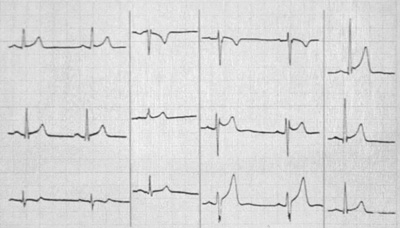
ECG
- Diffuse concave ST elevation (ST depression in V1)
- Low voltage if effusion
- Later flattening or inversion T globally
- Return to normal(3/12)
Management
Treatment is most effective when inflammation is treated hard and early - emphasise the importance of patients completing the entire course of treatment.
- Aspirin (750-1000mg every 8hrs) plus PPI for 2 weeks
or - Ibuprofen (600mg every 8 hours) plus PPI for 2 weeks
plus - Colchicine 0.5mg once (<70kg) or 0.5mg bd (≥70kg) for up to 3 months
- Refer cardiology if high risk features, ongoing pain or recurrent episode